Virtual Try-On Is Broken (And Here’s What Actually Works in 2026)
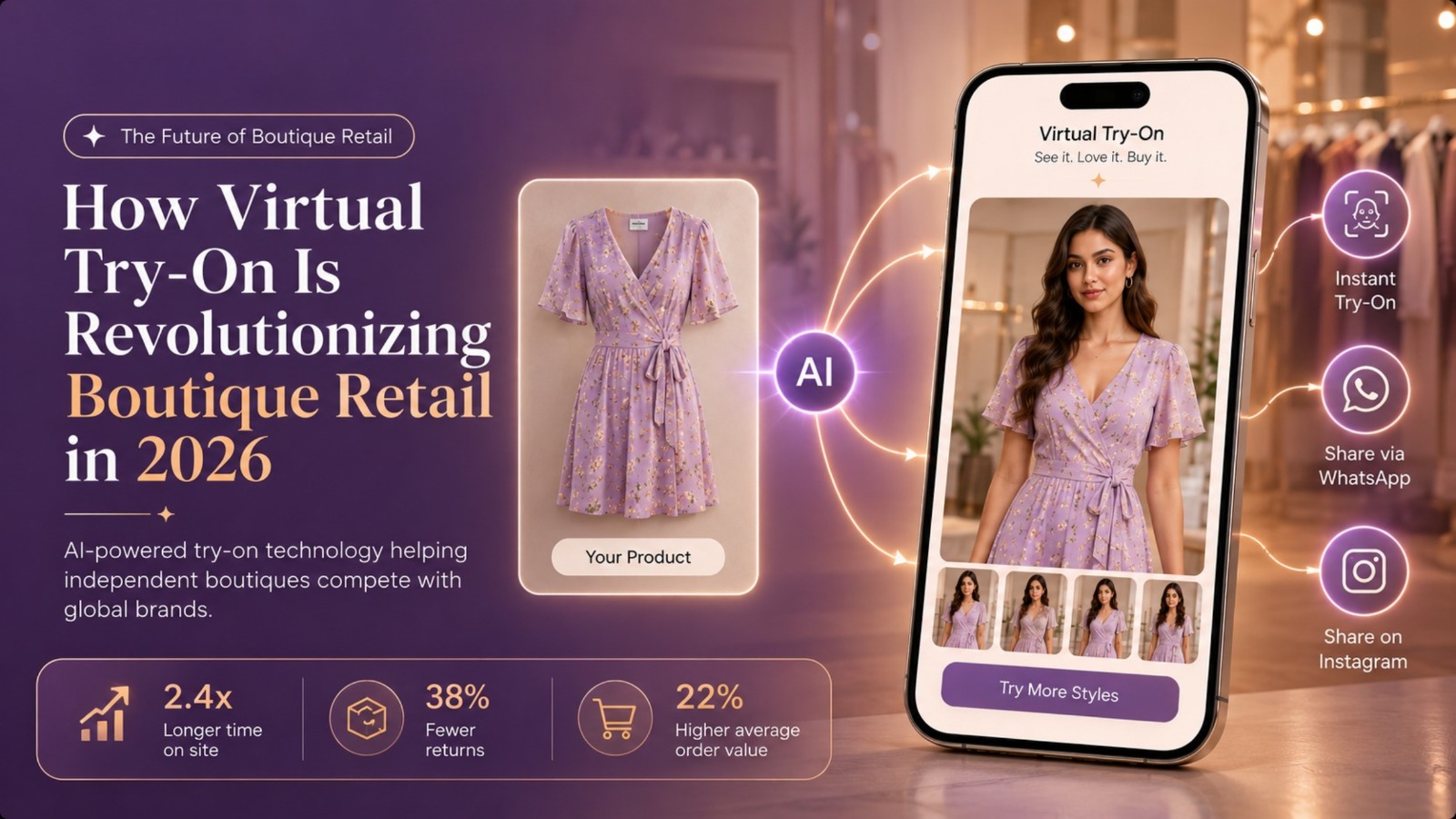
Virtual try-on promised to transform online fashion shopping, but most experiences still fail to build user trust. Here’s what modern fashion brands are using instead in 2026.
Introduction: The Promise vs The Reality
For years, virtual try-on has been positioned as the future of fashion.
“Upload your photo and see how clothes look on you.”
Sounds perfect.
But in reality, most virtual try-on experiences still fall short.
- Poor fit accuracy
- Unrealistic draping
- Awkward body alignment
- Low trust from users
The result:
Consumers try it once — then rarely return.
So what went wrong?
And more importantly, what actually works today?
---
Why Virtual Try-On Failed (Till Now)
1. It Tried to Solve Too Much, Too Early
Early virtual try-on tools attempted to map garments onto real human bodies with limited data.
The complexity is massive:
- Body shapes vary infinitely
- Fabric behaves differently across garments
- Lighting and pose affect perception
The technology simply wasn’t mature enough.
---
2. Fit Accuracy Was Poor
Consumers care about one thing:
“Will this actually fit me?”
Most tools couldn’t answer that reliably.
Loose garments looked tight. Tight garments looked distorted.
Trust broke.
---
3. Fabric Simulation Was Weak
Clothing is not static.
It folds, stretches, drapes.
Most virtual try-on systems treated garments like flat textures.
The result was an artificial, almost plastic-looking experience.
---
4. User Effort Was Too High
Users had to:
- Upload photos
- Adjust body points
- Wait for processing
The friction was simply too high.
Most users dropped off.
---
5. It Didn’t Solve a Core Buying Problem
Virtual try-on focused on visualization.
But buying decisions depend on:
- Style confidence
- Social proof
- Brand trust
Not just seeing the outfit.
---
The Shift in 2026: What Actually Works
1. AI-Generated Model Visualization (The Real Winner)
Instead of forcing clothes onto user images, brands are now showing products on:
- Multiple body types
- Multiple models
- Multiple styling contexts
This solves:
- Fit understanding
- Style inspiration
- Visual clarity
With far higher quality.
---
2. Assisted Try-On (Hybrid Approach)
Instead of full automation, the best systems now:
- Guide users
- Offer reference-based visualization
- Use controlled overlays
Accuracy improves significantly.
---
3. Personalization Without Heavy Input
Instead of asking users to upload photos, new systems use:
- Size inputs
- Preference signals
- Purchase behavior
To suggest relevant visuals.
---
4. Content-Led Confidence > Try-On Accuracy
This is the biggest shift.
Consumers don’t need perfect try-on.
They need confidence.
Confidence comes from:
- Seeing the product on relatable models
- Multiple angles and contexts
- Realistic representation
---
What This Means for Fashion Brands
Virtual try-on isn’t disappearing.
But the old approach is.
Focus Shift
From:
“Can we show it on the user?”
To:
“Can we help the user imagine wearing it?”
Winning Strategy
- High-quality AI model imagery
- Multiple body representations
- Strong styling context
---
Where Glamore.ai Fits In
Glamore.ai is built around what actually works.
Instead of forcing broken try-on experiences, it enables brands to:
- Generate realistic AI-powered model imagery
- Showcase products across multiple contexts
- Build confidence at scale
---
FAQs
Why does virtual try-on not work well?
Because of limitations in fit accuracy, fabric simulation, and user experience.
Is virtual try-on still relevant in 2026?
Yes, but in evolved forms like assisted try-on and AI visualization.
What is better than virtual try-on?
AI-generated model imagery that shows products in realistic contexts.
Should brands invest in virtual try-on?
Only if it improves user confidence and not just as a gimmick.
---
Final Thought
Virtual try-on promised accuracy.
What consumers actually wanted was confidence.
The brands that understand this shift will lead the next era of fashion commerce.